

If you bring home a bag of crickets for your bearded dragon and half of them are gone in a couple days, you are facing the exact choice behind how to keep crickets alive longer for beginners. You need to decide what kind of keeping advice will fit your dragon’s age, your enclosure size and available space, your current setup for feeders, and your budget for time and supplies.
This buying guide walks through that decision without pushing a full breeding operation on someone who just wants lively feeders through the week. You will learn what to look for in a practical guide, how to match it to your situation, and which beginner pitfalls cause most die off. Updated for November 2026, it uses a few feeder books as examples.
What Actually Matters
Cricket guides vary a lot. Some focus on short term storage, others teach full farming, and a few cover insect biology more broadly. For more background on feeder options, browse the Feeder Insects: Crickets, Dubia and BSFL section before you pick a direction.
Scope: Storage Versus Farming Versus General Insect Keeping
Start by checking scope. A storage focused guide teaches you how to hold purchased crickets alive and active for several days to a couple weeks, with cleaning, feeding, and odor control. A farming guide teaches breeding cycles, egg laying, incubation, and harvesting, which is a different commitment in space, bins, and daily care. A general insect keeping handbook covers many species and behaviors, which is interesting but often less step by step for feeder turnover.
Weigh this against how your dragon eats now. A young growing dragon that needs live insects daily will burn through crickets fast, so simple storage skills matter more than breeding at first. If you feed several insect eaters or want a steady supply, farming instruction starts to make sense. Pick the scope that matches what you will actually do this month, not what sounds ambitious.
Housing Basics That Actually Prevent Die Off
Most beginner losses come from crowding, poor airflow, moisture buildup, and dirty bins, not from mystery illness. Look for a guide that explains container choice in plain terms, ventilation without escapes, hides like egg flats or tubes to reduce stress, and how often to clean out waste and dead insects. It should also explain dry food plus moisture sources such as fresh vegetables, and why open water dishes cause drowning and bacterial growth.
You want checklists you can follow on day one. Good signs are a setup list, a daily and every few days routine, and troubleshooting for smell, mold, mites, or sudden die off. If a book spends most pages on theory and skips cleaning frequency, feeding rhythm, or ventilation, you will still be guessing when crickets start to fade. Beginners do best with clear routines tied to a small home setup.
Beginner Friendliness and How You Like to Learn
Consider reading level and format. Some beginners want a short, direct manual with photos and steps they can apply tonight. Others prefer a longer handbook with background on life cycles and colony management. Look for plain language, defined terms, and a logical order from setup to daily care to problem solving. Keepers commonly report that easy to follow steps and quick reference tables matter more than page count when you are tired and need to clean a bin.
Also check whether the guide assumes prior experience. A true beginner title explains how to transfer crickets without escapes, how to spot a failing bin early, and what to do when you go out of town for a few days. If the sample pages jump straight to incubators and production schedules, it may suit a future goal but not your current need for steady, low odor keepers.
Feeder Quality for Bearded Dragons
Keeping crickets alive is only half the job. They also need to be nutritious and clean for your dragon. Look for guidance on gut loading with safe greens and dry feeds, which foods to avoid, and how to keep bins dry enough to limit bacteria and odor. A helpful guide will also talk about variety and rotation, since many keepers mix crickets with Dubia roaches or black soldier fly larvae. For ideas on mixing feeders, see these cricket care basics alongside your staple insect plan.
Pay attention to safety habits. The guide should remind you to remove dead crickets promptly, wash hands and tools, and avoid wild caught insects or pesticide exposed greens. It does not need to give veterinary dosing advice, but it should encourage clean sourcing and steady turnover so you are feeding active, well fed insects rather than weak survivors from an old bin.
To show what this looks like in practice, here are a few options that show the range from quick storage tips to full farming and general insect science. Use them to compare scope and depth rather than as a ranked list.
This article contains affiliate links. If you buy through one of our links, DragonPop may earn a commission at no extra cost to you. Commissions never influence which products we recommend or how we rank them. Read our Affiliate Disclosure for details.
Quick Picks at a Glance

Prime Ultimate Guide to Cricket Farming Book

Prime Insect Keeping Handbook: Complete Beginner

Prime Orthopteran Zoology by Orin McMonigle

Prime Keeping Crickets: Secrets to Longer Lasting Feeder

Prime The Complete Cricket Farming Guide for Beginners
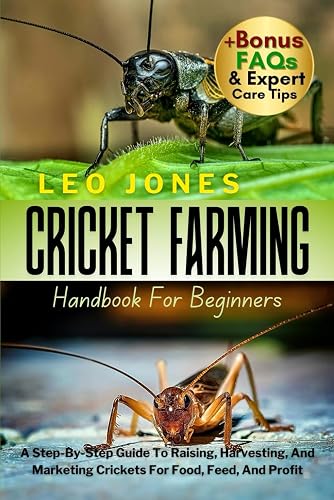
Prime Cricket Farming Handbook for Beginners by Leo
As an Amazon Associate we earn from qualifying purchases. Product prices and availability are accurate as of the date/time indicated.
Pros
- Covers both animal feed and human consumption uses in one concise guide
- Strong focus on sustainability, low resource methods, and year round farm maintenance
- Includes business essentials like scaling, financial planning, and market navigation for new entrepreneurs
- Large 8.5 x 11 inch format with 91 pages of step-by-step instructions and case studies
Cons
- 91 page length may feel introductory for experienced commercial insect farmers seeking advanced data
- Independently published paperback, so print quality and editing may vary from major publishers
- Focuses on general practices, readers needing region specific regulations will need additional research
The Ultimate Guide to Cricket Farming by Dr. Felix Davis is a 91-page manual focused on raising crickets sustainably for reptile and livestock feed plus human protein. It is written for beginners, homesteaders, reptile keepers, and small agribusiness starters who want a clear entry point.
Standout coverage includes breeding cycles, environmental control, hygiene, pest prevention, harvesting, and preparation for feed and food use. The business sections on scaling, automation ideas, budgeting, and market strategy give it real world value beyond basic care guides.
As a large format 8.5 x 11 inch paperback, the layout is spacious and easy to follow for setup checklists and maintenance routines. Being independently published, it reads as a practical workbook rather than a glossy textbook, which suits hands-on use on the farm.
The main limitation is depth, as experienced commercial producers may want more data, diagrams, and region specific legal detail. Readers will still need to verify local regulations and food safety rules before selling feed or edible insects.
Overall, this is a practical, accessible starter guide for anyone curious about low footprint protein farming. If you want an introduction to cricket setup, breeding, and selling, this book delivers a solid foundation.
Publisher: Independently published, May 3, 2025. Language: English, Print Length: 91 pages, ISBN-13: 979-8282377767.
Format: Paperback, Dimensions: 8.5 x 0.21 x 11 inches, Weight: 10.6 ounces. Category: Pet Insects, Reptile and Amphibian Care, Zoology.
Pros
- Covers wide range of popular kept species in one guide
- Emphasis on ethical and scientific practices, not just basic care
- Practical focus on habitats, feeding and troubleshooting for real setups
- Useful for multiple levels, from hobbyists and students to advanced enthusiasts
Cons
- Independently published format may lack full color photography found in larger entomology texts
- 197 pages means advanced keepers may want deeper species specific books for complex breeding
- No indication of illustrations or visual guides for habitat builds
The Insect Keeping Handbook by Michael J. Long is a 197 page guide designed for hobbyists, students and aspiring entomologists interested in ethical insect care. It aims to bridge beginner basics and advanced topics in a single accessible volume.
Standout coverage includes habitat creation, feeding, breeding, observation and troubleshooting for beetles, stick insects, mantises, butterflies and more. The inclusion of resources, organizations and research insights adds real world value for readers who want community support and continued learning.
As an independently published paperback, the book uses a compact 6 x 9 inch format that is portable and easy to reference. Writing is described as clear and step by step, making complex care routines approachable without heavy academic jargon.
Drawbacks include limited depth per species due to the broad scope and single volume length. Readers seeking detailed photography, advanced breeding data or highly specialized species manuals may need supplemental sources.
Overall, this handbook is a practical starting point for anyone entering insect keeping with an ethical and scientific mindset. It is best suited to beginners and intermediate keepers who want broad, actionable guidance across multiple species.
Publisher: Independently published, Publication Date: September 26, 2025
Language: English, Print Length: 197 pages, ISBN-13: 979-8267279697
Item Weight: 9.6 ounces, Dimensions: 6 x 0.45 x 9 inches, ASIN: B0FT1M5GT2
Category: Pet Insects and Spiders Care, Author: Michael J. Long
Pros
- Unique niche coverage with no other book focused solely on Orthoptera husbandry
- Broad species scope from common feeders to rare and flamboyant exotics
- Authored by an experienced invertebrate specialist with multiple published guides
- Large 8 x 10 inch format with 194 pages for detailed instruction
- Positive reader feedback reflects strong satisfaction among entomology readers
Cons
- Specialized focus on Orthoptera only, not ideal if you keep other invertebrate groups
- Detailed husbandry approach may feel advanced for young beginners or casual pet owners
- Large paperback size at 1.7 pounds is less convenient for field use or travel
Orthopteran Zoology by Orin McMonigle is a dedicated husbandry guide for grasshoppers, crickets and katydids. It is designed for beginners, experienced breeders, educators, zoo professionals and feeder insect producers.
The book stands out as the first title devoted entirely to maintaining Orthoptera over successive generations in captivity. It covers singing crickets, leaf katydids, thorny predators, cave crickets, king crickets and colorful grasshoppers with practical care methods.
In real world use, the guidance supports live displays, dried collections, classroom projects and feeder production. Readers gain clear insight into housing, feeding, breeding cycles and species specific needs for natives and exotics.
The large 8 by 10 inch paperback offers 194 pages of in depth content in a readable layout. The niche focus means casual keepers wanting general pet care may find it technical, and field portability is limited.
Overall, this is an essential reference for anyone serious about Orthoptera. If you want to keep, breed and truly understand these singing and flamboyant insects, this expert guide delivers lasting value.
Publisher: Coachwhip Publications. Publication date: September 21, 2021. Language: English.
Print length: 194 pages. ISBN-10: 1616465166. ISBN-13: 978-1616465162.
Item weight: 1.7 pounds. Dimensions: 8 x 0.69 x 10 inches. Category: Pet Insects and Entomology.
Pros
- Written by experienced commercial cricket breeders with practical, tested advice
- Covers complete care from housing and feeding to growth control
- Beginner friendly language that remains useful for experienced keepers
- Helps improve feeder nutrition for healthier reptiles and amphibians
Cons
- Only available as a Kindle eBook with no print version listed
- Short 59 page length may leave advanced breeders wanting more depth
- Published in 2017, so some product or supply references may feel dated
Keeping Crickets: The Secrets to Longer Lasting Crickets is a Kindle guide created by the owners of Cricket King for reptile and amphibian keepers. It is aimed at beginners and experienced breeders who rely on feeder crickets and want to cut waste and hassle.
The book focuses on practical care including housing, feeding, watering, temperature and cleaning routines. It also teaches how to speed up or slow down growth so your crickets are the right size when you need them.
As a digital guide, it offers enhanced typesetting, Page Flip and Screen Reader support for easy reading on Kindle devices and apps. The 59 page format is concise and organized, so you can quickly find answers without wading through filler.
The short length means advanced commercial breeders may want more detail on large scale breeding setups. Since it was published in 2017, some product recommendations and housing supplies may feel a bit dated.
Overall, this is a smart, time saving resource for anyone tired of crickets dying too fast. If you keep bearded dragons, geckos, frogs or other insect eaters, this guide will help you keep healthier feeders with less effort.
ASIN: B077XMLQH2, Publication date: December 4, 2017, Language: English, Print length: 59 pages.
File size: 3.0 MB, Enhanced typesetting: Enabled, Screen Reader: Supported, Page Flip: Enabled.
Reading age: 10 to 18 years, Category: Reptile and Amphibian Pet Care, Format: Kindle eBook.
Pros
- Covers both food and feed uses, from protein powder to poultry and fish meal
- Emphasizes sustainable, low resource farming with practical feed conversion and waste reuse tips
- Accessible for absolute beginners with no large land or livestock experience required
- Compact 166 page format focused specifically on crickets rather than general insects
Cons
- Beginner level focus may feel basic for experienced insect farmers
- Independently published title with limited editorial reviews available to verify depth
- Niche topic means readers must still research local regulations for selling insects
The Complete Cricket Farming Guide for Beginners by Flip Wilson is a 166 page instructional book focused on starting and running a small scale cricket farm. It is written for absolute beginners, homesteaders and aspiring agripreneurs curious about food, feed and profit opportunities.
The book stands out for its practical, low barrier approach using simple bins, steady feed and controlled conditions. It explains fast production cycles of 6 to 8 weeks, high protein benefits around 60 to 70 percent, and dual uses for human food and animal feed.
As a paperback, it offers a clear step by step structure with beginner friendly language and a logical flow from setup to harvest to market. The compact 6 by 9 inch format and focused length make it easy to read and reference during setup.
The main limitation is its introductory scope, so experienced farmers may want more advanced breeding or business data. Readers will also need to check local food safety rules and sales regulations separately, as these vary widely by region.
Overall, this is a solid starting point for anyone exploring cricket farming as a sustainable side business or farm addition. If you want an affordable, focused primer on insect farming success, this guide delivers clear direction to help you begin with confidence.
Publisher: Independently published, Publication date: August 18, 2025, Language: English
Print length: 166 pages, ISBN-13: 979-8298574228, Item Weight: 10.9 ounces
Dimensions: 6 x 0.38 x 9 inches, Category: Insects and Spiders, Biology and Sustainable Agriculture
Pros
- Covers the full cycle from setup to marketing, ideal for true beginners
- Focuses on sustainable, low space and low resource farming model
- Highlights multiple profitable uses from human food to animal feed and fertilizer
- Explains fast 6 to 8 week harvest cycle for year round production
Cons
- Independently published primer with limited mention of visuals or advanced commercial scale systems
- Focused on beginner fundamentals, experienced insect farmers may want more depth
- No companion digital resources or video tutorials referenced for hands-on support
The Cricket Farming Handbook for Beginners by Leo Jones is a 147-page introductory guide to micro-livestock farming for food, feed and profit. It is written for complete beginners, homesteaders and small agribusiness starters with limited land and resources.
The book stands out for its full cycle coverage, from species selection like Acheta domesticus to breeding, feeding, egg laying and harvesting in 6 to 8 weeks. It clearly connects farming practice to real income paths such as protein flour, pet and poultry feed, fishing bait and frass fertilizer.
As a compact 6 by 9 inch paperback, the layout is straightforward and focused on actionable steps rather than theory. The language is accessible, with practical emphasis on warmth, humidity, container setup and use of organic by-products for low cost production.
The main limitation is depth, as advanced operators may want more on automation, large scale processing and regulations. As an independently published primer, it also lacks referenced visuals, case studies or digital companions to support hands-on learning.
Overall, this is a solid starting point if you want to test cricket farming quickly and sustainably. If your goal is a low investment protein venture with multiple markets, this handbook gives you the foundation to begin with confidence.
Publisher: Independently published, Publication date: August 26, 2025
Language: English, Print length: 147 pages, ISBN-13: 979-8262218851
Dimensions: 6 x 0.34 x 9 inches, Item Weight: 9.9 ounces
Category: Biology of Insects and Spiders, Sustainable Agriculture, Pet Food and Nutrition
Matching Gear to Your Enclosure
Think in scenarios rather than titles. Match the guide depth to your dragon, your space, and how many crickets you move through each week.
Scenario one: juvenile dragon, frequent feedings, small apartment. You buy modest batches and need them to stay lively for several days with minimal smell. Look for a short storage focused manual. Keeping Crickets: The Secrets to Longer Lasting is the clearest example of this type, with practical storage instruction from feeder suppliers rather than breeding theory. Pair it with the routine in our feeder insect guides to set up a simple ventilated bin you can clean quickly.
Scenario two: adult dragon plus extra mouths, or you are tired of store runs and want to try breeding. You have room for extra bins and time for daily checks. In that case look at a step by step farming title such as CRICKET FARMING HANDBOOK FOR BEGINNERS or THE COMPLETE CRICKET FARMING GUIDE FOR BEGINNERS. Both lean toward raising and harvesting rather than just holding store bought crickets, so expect lessons on life stages, laying bins, and planning for feed uses beyond one terrarium.
Scenario three: naturalist keeper who likes behavior and keeps more than crickets. You want context on grasshoppers, katydids, and other orthopterans, plus ethical and observational care. Orthopteran Zoology: How to Keep Grasshoppers offers that deeper species view, while INSECT KEEPING HANDBOOK: A Complete Guide covers broader insect care for beginners through advanced hobbyists. Choose this path if learning is the goal, then still use a simple storage checklist for your weekly feeder bin.
Common Mistakes
Mistake: buying a breeding book when you only need storage help. Many beginners start a colony plan, then feel overwhelmed by extra bins, heat management, and tiny hatchlings. Start with keeping skills first, get survival steady for a full batch, then decide if breeding fits your space and schedule.
Mistake: sealing crickets in a smooth, damp tub with little airflow and a dish of water. Keepers commonly report this as the fastest way to get odor, mold, and die off. Use a ventilated container, add vertical hides to spread out the crowd, offer moisture through fresh veggie pieces that you replace often, and clean waste and dead insects on a regular rhythm.
Mistake: skipping gut loading and cleanup because the crickets look alive. A lively cricket can still be poorly fed or housed in waste, which is not what you want to offer your dragon. Feed the insects well for a day or so before offering, toss sluggish or dead ones, and keep turnover fresh rather than mixing new purchases into an old dirty bin.
My Experience
I started with my adult dragon eating crickets a few times a week and I kept losing half the bag in a stuffy spare tub with little ventilation. I picked a short storage style guide first instead of a farming book because I did not have room for a breeding setup, and I rebuilt my bin with better airflow, egg flats, dry feed plus fresh greens, and cleaning every few days. Survival improved to well over a week with far less smell, and I still check the broader Feeder Insects: Crickets, Dubia and BSFL archive when I want to rotate feeders.
Who Should Wait or Buy Differently
If you only feed Dubia roaches or black soldier fly larvae and have no plans to buy crickets, a cricket specific manual is not ideal for you right now. It is also not the right choice if you want veterinary nutrition dosing or enclosure heating advice, since these books focus on insects rather than dragon care. Wait, borrow a checklist from a trusted keeper, or choose a broader insect handbook only if you genuinely enjoy keeping multiple species.
Frequently Asked Questions
How long should beginner crickets stay alive at home?
With a clean ventilated bin, hides, dry feed and regular moisture from fresh vegetables, keepers commonly report holding healthy batches active for several days to well over a week. Expect some natural loss, but heavy die off in the first couple days usually points to crowding, poor airflow, or excess moisture. A storage focused guide helps you fix those basics before you buy more.
Do I need to breed crickets to save money?
No, most beginners do better buying modest batches and improving storage first. Breeding can work if you have space for extra bins and time for daily care, plus a plan for tiny nymphs and continuous cleaning. If store runs feel manageable, stick with keeping skills and rotate with other feeders.
What should I feed crickets before offering them to my dragon?
Offer a simple gut load of dry cricket feed plus safe fresh greens and vegetables, and replace fresh pieces before they spoil. Avoid pesticide treated produce, remove uneaten moist food promptly, and keep water dishes out to prevent drowning. A good keeping guide will list safe staples and cleaning habits without giving medical dosing advice.

Write Your Review
No reviews yet. Be the first to share your experience!