

If you are buying a bag of crickets every few days because half die in the tub, you are dealing with the exact decision this guide covers. You want to learn how to keep crickets alive longer so your bearded dragon gets active, nutritious feeders without constant pet store runs.
Your best setup depends on your dragon’s age, your enclosure size, your current feeding setup, and your budget. As of November 2026, most keepers do well with a small ventilated keeper plus a complete gut load diet, and you can learn more in our Feeder Insects: Crickets, Dubia and BSFL guides before you buy.
What Actually Matters
Airflow and Waste Separation
Crickets die fast in warm, damp, stuffy boxes. You want ventilation on more than one side so air moves through, not just a few holes in the lid. Look for top and bottom vents that create steady exchange without letting tiny crickets slip out.
Waste separation matters just as much as air. When droppings and dead crickets sit with live ones, odor and mold build quickly. Keepers commonly report that a mesh floor with a slide out tray below makes daily checks much easier, since you can pull, rinse, and replace the tray without dumping the whole colony.
Food and Water That Do Not Kill Them First
Starved or dehydrated crickets lose nutrition fast, and open water is one of the top killers. You want steady access to food plus a water source that prevents drowning. Sponge waterers, water bowls designed for insects, and gel style diets all aim to solve the same problem.
For nutrition, look for a gut load that combines food, vitamins, minerals, and hydration in one simple form. Ingredients like kelp, spirulina, and brewer’s yeast are commonly used in complete cricket diets to support feeder quality. You still need to offer it consistently and remove spoiled pieces, not just toss it in once and forget it.
Size, Escape Security, and Cleaning Access
Overcrowding causes stress, fighting, and die off. You want enough floor and climbing space that crickets can spread out, plus hiding places like tubes or climbing walls. If you buy in bulk for a juvenile that eats often, you will need more capacity than someone feeding an adult a few times per week.
Escape security and cleaning access go together. Look for lids that latch firmly, fine mesh that holds small sizes, and a small feeding door so you can add food or pull dead insects without opening the whole top. If cleaning feels like a chore, you will skip it, so choose a design you can wipe and rinse in minutes.
Calm Environment and Easy Monitoring
Crickets react to light, vibration, and handling. A very clear box makes it easy to check food levels and activity without opening the lid, which is helpful for beginners. A darker, opaque body can reduce light triggered stress and keep insects calmer during housing and transport.
Think about where the keeper will sit in your home. If it lives next to your dragon tank in a busy room, calm features like hiding tubes and textured climbing surfaces help. If it lives in a closet or garage shelf, visibility may matter more so you actually notice empty food dishes or buildup.
To see how these tradeoffs look in real products, here are a few options that show the range from simple stackable boxes to full kits with dishes, tubes, and cleaning trays:
This article contains affiliate links. If you buy through one of our links, DragonPop may earn a commission at no extra cost to you. Commissions never influence which products we recommend or how we rank them. Read our Affiliate Disclosure for details.
Quick Picks at a Glance

Prime Atigrado Cricket Keeper Stackable Insect Habitat

Prime Fluker's Orange Cube Complete Cricket Diet 12 oz
Prime NANEEZOO Large Cricket Keeper with Dispenser

Prime NOMOY Self-Cleaning Cricket Keeper

Prime Atigrado Cricket Keeper with Feeding Door

Prime Atigrado Cricket Keeper Insect Habitat Box
As an Amazon Associate we earn from qualifying purchases. Product prices and availability are accurate as of the date/time indicated.
Pros
- Compact and stackable for efficient multi-colony storage
- Excellent top and bottom ventilation supports insect health
- Easy clean removable tray reduces maintenance time
- Transparent, non-toxic and reusable construction for safe monitoring
- No assembly required, truly ready to use
Cons
- Compact 690ml capacity is too small for large colonies or long term breeding
- Lightweight plastic body is less durable and secure than glass terrariums
- Single unit included, so multi-species breeders will need to buy multiples
The Atigrado Cricket Keeper AA-2446-ST is a compact, stackable habitat designed for storing and transporting live feeder insects. It is aimed at reptile and amphibian owners, small pet shops and breeders who need a simple, space saving solution.
Standout features include top and bottom ventilation for consistent airflow and a sieve plate with removable tray for fast cleaning. In daily use, this setup helps keep crickets, dubia roaches and mealworms active longer while reducing odor and mold buildup.
The keeper measures 3.8 by 3.3 by 3.6 inches and is made from clear, non toxic plastic for easy monitoring without opening the lid. It arrives fully assembled, stacks securely for multi colony organization, and is washable and reusable.
The main limitation is size, as the 690 cubic centimeter capacity suits small groups but not large breeding colonies. The lightweight plastic body is convenient but offers less durability and security than glass terrariums.
Overall, this is a practical, low maintenance choice for gecko, bearded dragon, frog and snake owners with limited space. If you need an affordable, ready to use feeder container that is easy to clean and monitor, it is a solid pick.
Brand: Atigrado, Model: AA-2446-ST, Set Name: Cricket Keeper Set. Dimensions: 3.8 inch L x 3.3 inch W x 3.6 inch H with 690 cubic centimeter capacity and square shape.
Material: Transparent, non toxic plastic with ventilated lid and removable bottom tray. Features stackable design with top and bottom ventilation, no assembly required.
Designed for crickets, dubia roaches, mealworms, silkworms and other small feeders. Suitable for reptiles, amphibians, spiders, scorpions and mantises for storing, breeding, feeding and transporting.
Pros
- True all in one solution for feeding and hydration
- Crickets and other feeders eat it readily
- Helps improve nutrition transfer to reptiles
- Clean and convenient cube form with no drowning risk
Cons
- Cubes can dry out or mold if left uneaten in humid setups
- Requires regular replacement every few days for freshness
- Tub must be kept tightly sealed for storage
Fluker's Orange Cube Complete Cricket Diet is an all in one gut load formula made for crickets, dubia roaches, mealworms and other feeder insects. It is built for reptile owners who want healthier, more nutritious feeders without juggling separate food and water.
Each cube delivers food, vitamins, minerals and hydration in one bite sized pellet made with kelp, spirulina and brewer's yeast. In real world use, crickets eat it readily and stay alive longer, which means more nutritious meals for your bearded dragon, gecko or chameleon.
The soft cube format comes ready to use in a resealable 12 oz tub, so you just drop a few cubes into the keeper. It eliminates open water dishes, which greatly reduces drowning risk and keeps enclosures cleaner and simpler to maintain.
It is not perfect, as cubes can dry out or develop mold in warm, humid setups if left uneaten. You will need to replace cubes every couple of days and keep the tub sealed tight for best freshness.
Overall, this is a convenient, proven gut load staple for anyone keeping live feeders. If you want lively crickets and better nutrition transfer to your reptile with minimal effort, it is an easy choice to keep on hand.
Brand: Fluker's, Model Number: 71301, Size: 12 oz resealable tub. Form: Soft orange pellet cubes for all life stages.
Key Ingredients: Dried kelp, spirulina, brewer's yeast with added vitamins, minerals and hydration. Made for crickets, dubias, mealworms and superworms.
Target Species: Reptiles fed with gut loaded insects. Use as a complete daily feeder insect diet with regular cube replacement.
Place 2 to 3 cubes in a shallow dish inside your cricket keeper or insect enclosure. Provide enough for insects to consume in 1 to 2 days, then replace with fresh cubes.
Keep the tub tightly closed in a cool, dry place to prevent drying or mold. Remove dried or soiled cubes promptly to keep the habitat clean.
Use as a primary gut load diet before feeding insects to your reptile for best nutrition transfer. Always pair with proper enclosure ventilation and routine cleaning.
Pros
- Tube dispensing makes feeding fast, clean and hands free with less escape risk
- Includes food and water dishes plus caps to keep tubes seated correctly
- Clear, ventilated housing is easy to observe, refill and clean
- Compact large size fits well for daily feeding routines and portability
Cons
- Plastic doors and corners feel thin and may crack with rough handling or scrubbing
- Tubes must be assembled with clear caps correctly or they can slip down
- 0.8 liter capacity suits small to medium colonies but needs frequent cleaning for larger groups
The NANEEZOO Large Cricket Keeper is a dedicated housing and dispensing station for live feeder crickets and other insects. It is built for reptile owners, pet shops and amphibian keepers who feed geckos, lizards, snakes, turtles, frogs and toads.
Its standout system is four black hiding tubes that crickets naturally crawl into for shelter. You simply pull a tube, shake out the amount you need into the habitat and replace it for truly no touch feeding.
The keeper includes separate food and water tubs with dishes, plus a ventilated removable lid for airflow and easy access. The high transparency body lets you quickly check food, water and cricket activity without opening the box.
Build quality is lightweight, washable and non toxic plastic with a portable handheld design for home use or travel. Some users note the doors and corners feel thin, so gentle handling and careful cleaning will extend its life.
For anyone tired of chasing or touching crickets, this is a practical and time saving upgrade. Once the tube caps are assembled correctly, it keeps crickets contained, nourished and ready to dispense with less mess and stress.
Brand: NANEEZOO, Model: CK-1, Color: Black, Style: Modern for insect and reptile use.
Capacity: 0.8 liters, Weight: 0.81 kg, Package Size: 11.3 x 7.64 x 6.93 inches.
Includes: Keeper box with removable ventilated lid, 4 dispenser tubes with caps, food dish and water bowl, black hiding tube.
Use: Housing, keeping and dispensing live crickets for geckos, lizards, snakes and other insect eating pets.
Pros
- Secure escape proof lid and fine mesh design trusted for tiny crickets and dubia nymphs
- Slide out cleaning tray and 360 degree ventilation keep habitat drier, fresher and less smelly
- Feeding hatch, scoop and tongs make daily feeding faster and less hands on
- Dark, calm interior with climbing wall helps reduce stress related deaths
Cons
- Opaque dark walls limit easy viewing compared to fully clear keepers
- No side handle, which makes pulling it from cupboards or shelves less convenient
- 1.72 gallon size works for temporary housing or small colonies, not large breeding operations
The NOMOY H23 Self-Cleaning Cricket and Roach Feeder Habitat is an 11 x 7 x 5 inch keeper built for reptile owners, small scale breeders, and anyone housing live feeder insects indoors. It holds up to 300 dubias, 200 crickets, or 1000 mealworms, making it ideal for temporary housing and daily feeding routines.
Standout features include the triple escape proof locking lid with ultra fine mesh and the small feeding door that prevents mass escapes during care. Owners report easier daily feeding with the included tongs and scoop, plus calmer insects thanks to steady airflow and the sponge waterer that prevents drowning.
The dark gray and blue plastic body feels sturdy and uses smooth walls to prevent climbing escapes, while top and bottom vents keep air fresh and dry. The removable 3D climbing wall adds vertical hiding space to reduce stress and aggression, and the slide out waste tray makes cleaning fast without handling every bug.
The opaque body that calms insects also makes quick visual checks harder compared to clear keepers, and there is no side handle for pulling it from a cupboard or shelf. It is sized for temporary holding or small colonies, so large scale breeding setups will still need bigger bins.
Overall, this is a smart, low mess upgrade over basic cricket boxes for dubia, cricket, superworm, and mealworm keepers. If you want secure containment, faster cleanup, and a complete ready to use kit, the NOMOY H23 is a practical pick for everyday reptile feeding.
Brand: NOMOY, Model: H23, Color: Grey and Blue, Material: Plastic, Style: Modern
Dimensions: 11.02 x 7.09 x 5.12 inches, Tank Volume: 1.72 gallons, Weight: 1.37 pounds
Capacity: Up to 300 dubia roaches, 200 crickets, or 1000 mealworms for temporary housing
Included: Enclosure with escape proof lid, removable climbing wall, feeding dish, 2 water sponges, feeding tongs and bug scoop
Pros
- Secure dual latch plus feeding door lock reduces escape risk
- Independent feeding access minimizes disturbance to the colony
- Slide out waste tray simplifies daily maintenance
- Transparent ventilated design for easy monitoring
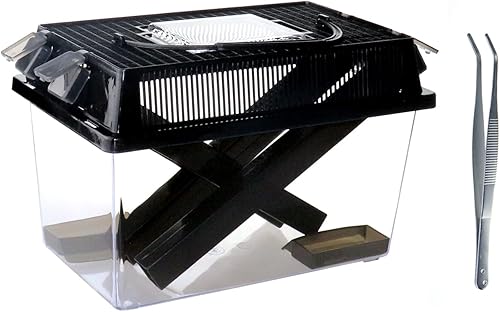
- Comes complete with dish and tweezers, no assembly required
Cons
- Small 5.5 x 3.6 x 4 inch footprint limits capacity for large colonies
- All plastic construction feels less durable than glass terrariums for long term breeding
- Mesh tray and small door require frequent cleaning and careful handling with very tiny insects
The Atigrado Cricket Keeper AA-2447-RT is a compact transparent holding box designed for crickets, dubia roaches, mealworms and silkworms. It is aimed at owners of geckos, bearded dragons, frogs, spiders and other insect eating pets who need a simple way to store, breed and transport feeders.
The standout feature is the independent front feeding door, which lets you add food and water or remove dead insects without lifting the main lid. Combined with dual side latches plus a feeding door lock, the system keeps active crickets contained while reducing stress and escape chances during daily care.
Built from high clarity non toxic plastic, the keeper offers full visibility and ventilation in a 5.5 by 3.6 by 4 inch rectangular form. It arrives ready to use with a feeding dish, tweezers and a removable bottom tray, and the mesh floor lets waste fall through for quick slide out cleaning.
The tradeoff is size. This is a small capacity container suited for dozens of insects, not bulk colony breeding. Very small nymphs may also test the mesh and door gaps, so regular cleaning and careful latching are important.
Overall, this is a practical, low maintenance option for beginners and small collection keepers who value easy cleaning and escape prevention. If you need a portable, transparent critter keeper for daily feeding, it covers the essentials well.
Brand: Atigrado, Model: AA-2447-RT, Dimensions: 5.5L x 3.6W x 4H inches, Capacity: 1200 cubic centimeters.
Material: Transparent non toxic plastic, Shape: Rectangular terrarium style box with ventilation.
Includes: Keeper box, removable bottom tray, feeding dish and tweezers, no assembly required.
Suited for: Crickets, dubia roaches, mealworms, silkworms and similar feeder insects for reptiles and amphibians.
Pros
- Convenient front feeding door minimizes disturbance and escape risk
- Slide out waste tray makes daily cleaning fast and simple
- Complete set with bowls and tweezers, ready to use out of the box
- Clear compact design is great for observation and small spaces
Cons
- Very small 5.5 inch size is too limited for breeding or bulk feeder storage
- Bottom waste tray is not latched and can detach if knocked or bumped
- Feeding bowls are extremely small, about bottle cap size, and need frequent refills
The Atigrado Cricket Keeper AA-2455-RT-New is a compact transparent habitat designed for holding live feeder crickets and other small insects. It is aimed at reptile owners with geckos, bearded dragons or frogs, plus classrooms and hobbyists who need simple short term storage.
Its best idea is the front feeding door that lets you add food, water or extra crickets without removing the main lid. Paired with separate food and water bowls plus included tweezers, daily feeding feels quick, tidy and less stressful for both keeper and insects.
Built from lightweight transparent plastic, the box offers good visibility and ventilation for easy monitoring. Dual side latches secure the top lid firmly, and the mesh floor plus slide out bottom tray is a smart touch for separating waste from live insects.
The main limitation is size, as the 5.5 by 3.6 by 4 inch interior holds only a small number of crickets and suits observation more than breeding. The bottom tray is also unlatched and can shift if bumped, while the two bowls are very small and need frequent refills.
Overall, this is a convenient starter keeper for kids, single reptile households or travel use rather than bulk breeding. If you need a no assembly, easy clean box for a few dozen feeders at a time, it works, but large collections will need a bigger habitat.
Matching Gear to Your Enclosure
Scenario one is the small space owner with a young, hungry dragon. You buy often and need something compact and simple to clean. The Cricket Keeper – Stackable Insect Habitat shows this style well, with a footprint described as 3.8″L x 3.3″W x 3.6″H, top and bottom ventilation, and a removable tray that catches waste below a sieve plate. Pair a small keeper like this with Fluker’s Orange Cube Complete Cricket Diet, which is made to provide food, vitamins, minerals, and hydration for feeder insects, so you are not juggling separate dry food and open water.
Scenario two is the owner who buys larger counts and hates chasing escapees. You need latches, fine mesh, and a way to feed without opening the lid. The NANEEZOO Cricket Keeper, Equipped with Water illustrates the tube style approach, with a food feeding tub, water feeding tub, black hiding tube, and dispenser tubes for moving crickets to the tank. The Cricket Keeper – Insect Breeding Box with Feeding and Cricket Keeper – Live Insect Breeding Box show a similar idea with a front feeding door and side latches, plus included bowls and tweezers. If you feed inside the main bearded dragon enclosure, those dispenser tubes and feeding doors help you dose a few crickets at a time.
Scenario three is the owner dealing with smell, moisture, and frequent die off from bulk purchases. Look for a larger, low stress design with serious cleaning access. The Self-Cleaning Cricket & Roach Feeder Habitat is the higher-end pick in this set, with a size listed as 11 inches x 7 inches x 5 inches, a dual layer base where waste falls to a bottom tray, a mini feeding door, sponge waterer, and removable climbing wall. It is described as holding up to 300 Dubias or 200 crickets temporarily, which suits someone rotating feeders for one adult dragon or two tanks. You can compare keeper styles in our feeder insects category hub to see what fits your shelf and cleaning routine.
Common Mistakes
Mistake one: using open water and fresh veggies alone. Crickets drown easily and wet food spoils fast, which raises humidity and odor. Use a sponge, insect safe bowl, or complete diet with hydration built in, and remove uneaten fresh pieces before they get soggy.
Mistake two: overcrowding a tiny tub with no hides. When crickets pile on each other with nowhere to climb, stress and deaths climb too. Give them vertical space, tubes or egg crate style hides, and split large purchases into two keepers if they look packed. Keepers commonly report better survival when the colony has room to spread out and airflow stays steady.
Mistake three: skipping waste removal until it smells. By the time you smell ammonia, conditions are already poor. Pull dead crickets often, slide and rinse the waste tray regularly, and wipe the walls if you see condensation. A keeper with a removable tray and front access makes this five minute check far more likely to happen.
My Experience
I keep one adult bearded dragon next to a small shelf for feeders, so I started with a compact transparent keeper with a mesh floor and pull out tray because I could see food levels without opening it. I added a complete cube diet for steady gut loading plus a sponge style water source, and I pull the tray and dead crickets every morning before lights on. That simple routine cut my die off noticeably compared to the tall plastic tub I used before, which stayed damp and was a pain to clean.
Who Should Wait or Buy Differently
A dedicated cricket keeper kit is not ideal for every home. If you only feed a few crickets per week, if you are switching your dragon mainly to dubia roaches or black soldier fly larvae, or if you cannot store insects somewhere ventilated and away from sprays and strong heat, hold off and use up what you have first. You may also want a different approach if you need to house very large bulk counts long term, since small keepers described around 5.5″L x 3.6″W x 4″H are better for short term holding and frequent feeding, and you can browse other live feeder housing options before you commit.
Frequently Asked Questions
Why do my crickets keep dying within a day or two?
Most early deaths come from poor airflow, buildup of waste, drowning in open water, or lack of steady food. Move them out of the shipping bag quickly, give them ventilation, hides, and a safe water source, and remove dead insects often so conditions stay drier. Keepers commonly report that cleaning and steady gut loading help more than any single product.
Do I need separate food and water dishes for crickets?
Separate dishes help keep food dry and make checks easier, and several keepers in this range include one bowl for food and one for water plus tweezers. You can also use a complete diet that combines food, vitamins, and hydration to simplify the routine. Either way, avoid deep open water and clean the dishes before they get filmed or moldy.
Should I choose a clear keeper or a dark, opaque one?
Choose clear if you want to monitor activity and food levels without opening the lid, which is great for beginners and small daily feedings. Choose dark and opaque if your insects seem skittish or you house them in a bright, busy spot, since reduced light can lower stress related losses. Good ventilation and regular waste removal matter in both styles, so pick based on where you will keep the box and how often you check it.

Write Your Review
No reviews yet. Be the first to share your experience!